

The brain and its parts: lobes, cerebellum, brainstem, and internal structures
The brain is one of the most fascinating organs in the human body. It weighs no more than three pounds, yet it coordinates everything you think, feel, and do. From deciding which show to watch to running in a game, your brain is behind every action. Learning about its parts and how they work together is like looking at the map of a city that never sleeps.
In this article we will explore the brain lobes, the cerebellum, the brainstem, and also the internal subcortical structures that regulate emotions, memory, and motivation.
The brain lobes: the neighborhoods of your brain
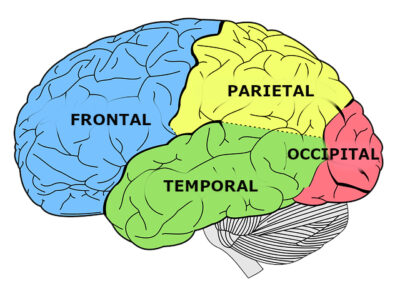
The cerebral cortex is the outer part, the one you see in drawings with folds and wrinkles. It is divided into “neighborhoods” called lobes, each with specific functions:
- Frontal lobe (behind the forehead): it’s like the orchestra conductor. It plans, organizes, controls your impulses, and helps you make decisions.
- Parietal lobe (upper back part): processes sensory information, such as touch and spatial orientation.
- Temporal lobe (on the sides): handles memory and the recognition of sounds and faces.
- Occipital lobe (back part): the visual processing center. Everything you see passes through here.
Caption: The brain lobes are the specialized areas of the cortex that process different functions.
The cerebellum: the silent coordinator
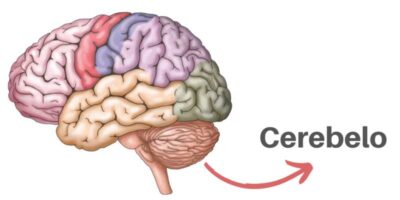
Although it takes up only 10% of the brain’s volume, it contains almost 80% of its neurons. The cerebellum, located at the back and bottom, is responsible for:
- Coordination of movements.
- Balance and posture.
- Precision in motor tasks such as writing or playing an instrument.
The brainstem: the guardian of life
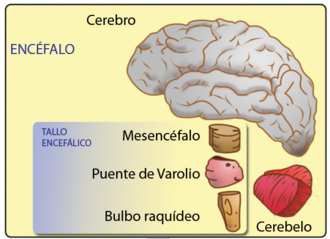
The brainstem connects the brain with the spinal cord. It is the oldest part and is responsible for keeping us alive without our having to think about it. It controls:
- Breathing.
- Heartbeat.
- Sleep and wakefulness.
It’s like the “power plant” that never shuts down.
The subcortical structures: the brain’s backstage
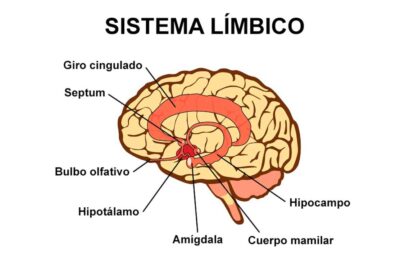
Inside the brain, beneath the cortex, lie the subcortical structures. Although we can’t see them at first glance, they are essential for emotional life and learning. Among the most important:
- Limbic system: regulates emotions and memory. It includes the amygdala (fear response) and the hippocampus (memory formation).
- Thalamus: it works as an “information bridge,” directing what reaches the cortex.
- Hypothalamus: controls temperature, hunger, thirst, and hormone release.
Conclusion
- The brain is a perfectly coordinated team:
- The lobes think, feel, and process information.
- The cerebellum fine-tunes and coordinates your movements.
- The brainstem keeps your body running.
- The internal structures regulate emotions, memory, and motivation.
- Understanding how each part works is the first step toward taking better care of your mind and body.